I read Stephen King’s seminal novel It as soon as the paperback dropped in Scotland, which would be around 1987. I’d been on a voracious King kick ever since discovering his work in 1980, following the BBC broadcast of the Salem’s Lot miniseries. King’s work was the perfect reading material for my teenage years, and with the exception of The Dark Tower series (which I’ve still never read), I consumed his books like fire engulfs dry wood. I have a strong memory of being excited when I read of the then-upcoming novel. Even the title – It – was evocative to me. I was already well versed in the works of HP Lovecraft by the time I was 16, and the title, this one, simple little word, was something that Lovecraft would have used. Oddly enough, as excited as I was to finally read the book, very few memories of actually reading it have remained (and I haven’t read it since), so my review of It, the 2017 movie, is probably going to sound ignorant to some of you. 🙂
If you’ve seen this movie, maybe you felt the same way I did after watching it, maybe not. It polarized many a watcher when it was released opposite Tom Cruise’s mostly unentertaining The Mummy on the back of a minimalist advertising campaign, because as well as minimalist, the advertising is borderline misleading.
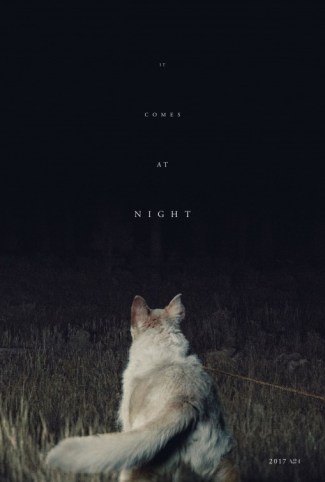
Ostensibly billed as a horror movie, it essentially gives away all of its salient images and lines of dialogue in the trailer, as well as adding a somewhat leading blurb about turning “men into monsters”. Hand in hand with the title, the goal was clearly to lead people into the cinema feeling as if they were getting the kind of horror movie promised by the trailer and eerie posters – some kind of apocalyptic story about retreating to the winderness to escape … something.
I’ll be honest, I expected a tired old alt-zombie story, and I was only half interested and uninspired by the trailer. I’m not a huge fan of Joel Edgerton, but he’s a watchable enough actor, and I enjoyed The Gift just fine. But I never intended to see this one in the cinema, and this was bolstered by mediocre headlines, and a lukewarm response from my daughter, who did see it during its limited theatrical release. Having now seen it, my critical reaction to it matches my prior expectations, even though the actual movie turned out to be far different than what I imagined.
Edgerton plays Paul, the head of a three person, multiracial family living in a large house deep within a thickly forested region of the USA – it looks like Oregon or Washington. The house is boarded up, and Paul, who (if I’m remembering correctly) was a CPA prior to the current, mysterious situation, keeps the house so buttoned down that there’s only one exit/entrance door, and he keeps the only set of keys on a string around his neck. This early on in the movie, it suddenly struck me that I could be in for a lot of underwriting. Paul is the only white character in the beginning scenes, and I couldn’t readily accept that Kelvin Harris’s Travis was the actual biological son of Paul. There’s nothing about this actor that looks remotely biracial, so I’m choosing to assume that Paul is actually a stepfather – this is a big deal to me when I consider the script to have been underwritten, because the movie is, essentially, one long exercise in tension, yet there is none of the inherent conflict one would reasonably expect between a young man and an assertive stepfather, in light of the situation. Travis is a bewilderingly passive character throughout, even though much of what little plot there is revolves around him. The characterization is one of the few things I genuinely liked about the movie, unfortunately, even this aspect is underdeveloped. Does Travis have a crush on Kim? Not enough to fuel any following scenes with the sexual tension one might expect would naturally arise from that kind of seclusion – though in fairness, Travis is written with the emotional maturity of someone aged eight, not seventeen. Carmen Ejogo, who plays Travis’s mother is barely sketched in, and Riley Keogh’s Kim gets better service from writer/director Trey Edward Shults but fails to be anything other than a moderately developed character. Christopher Abbott plays Will, the other father figure, and there’s always the feeling of inevitable conflict between both men, but Act 2 does very little to ratchet that up. It isn’t until the Act 3 conclusion where this happens, but not enough foundation was built on which to let this play out, and it felt hollow to me. I didn’t feel any great sense of either building cameraderie between the men during Act 2, and there’s not enough ambiguity created in the Act that tries to justify Paul’s mild, internalized paranoia.
Kim is the wife of Will and mother to their young son Andrew, and after a tense confrontation toward the end of Act 1, both families come to share the big house in the forest. Act 2 is full of dramatic moments for sure, but there is very little actual story to be found here. Aside from some nightmares experienced by Travis and one overtly mysterious happening, there is just not a lot of material here, and watching it I was reminded of another seemingly-post-apocalyptic drama, Z Is For Zachariah. In fact, it’s fair to say that both movies could easily take place in the exact same situation, but while Z unfolds as a pastoral, slow moving tale of loneliness, It Comes At Night is the flipside, where almost every minute drips with tension. This is VASTLY helped by Brian McOmber’s stunning score, because without that particular element I feel the movie would be very flat indeed.
I’ve more or less mentioned the positive things I took from the movie, but the negatives are very big. For one, the story exists almost out of context. We know something happened outside of the forest, and it involves people getting sick – but at no point do any of the characters speculate as to what is happening, or how widespread it is, or indeed why it’s so bad that fleeing the cities seems the only viable option for survival. No need to spoonfeed plot, but Shults seems determined to pry mystery from the omission of something so simple as logical human interaction. At no point in the movie does the greater context come into play, and I found that to be baffling from a writing point of view. I read a brief interview with Schults that revealed this as being a choice of his, knowing that some audience members would feel “frustrated” – I was only frustrated by the end result being unexplained and mysterious only because of omissions like this, not because of what was actively written. Just because a movie has no answers, doesn’t mean the questions the audience asks are not valid, and I felt that some of the questions I had were due to things being vague and unclear, sometimes breaking the movie’s own sense of internal logic. If Paul has the only set of keys, for example, and the small group are tensely debating how, at a major plot point, the only door was opened, placing them ALL in danger, Paul is never asked by anyone if he opened the door. That’s bad writing that springs from the Deus Ex Machina school of drama. There are plenty of badly written movies out there, and It Comes At Night never scrapes any barrels, but the underdeveloped plot elements are striking. In fact, when there ARE so many good elements (the movie is very well directed, and looks terrific, and the dialogue was pretty sharp and naturalistic), the only thing that left me with a profound sense of mystery at the end was why on Earth Shults made the writing choices that he did.
Immodestly, I have a pretty wide knowledge of what’s considered “black magic” – it’s been an interest of mine since my very early teens. I say this as someone who, simultaneously, has no belief whatsoever in the supernatural or magic, it’s just a subject that I’m endlessly fascinated by. Recently, I saw a blurb on the internet claiming that a horror movie explored the Abremalin ritual in detail, so I had to see it for myself. That movie is 2016’s A Dark Song.
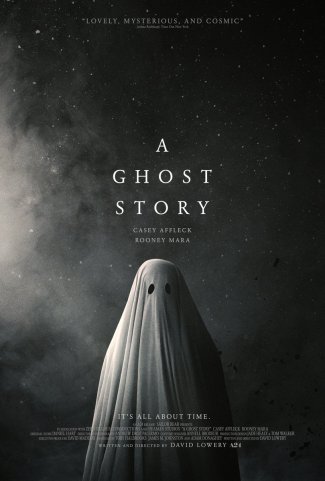
Here’s a question for you: what do Michael Bay’s Transformers movies have in common with A Ghost Story? What element do they possess that ties them together? On one hand, you have a multi-billion grossing kinetic action franchise full of all kinds of wanton destruction – on the other, David Lowery’s movie is small and quiet. Where could the connection possibly be? Simple: audience polarization. The audience for both appears to be divided into two camps, one who enjoys the experience, one that dislikes it.
In The Founder, the resurgent Michael Keaton (Spider Man: Homecoming) plats Ray Kroc, the man behind the staggeringly successful McDonalds empire. When I first heard of this movie, it didn’t seem all that interesting to me. Ubiquity, I feel, tends to make people take things for granted, render them too familiar – and familiarity doth breed contempt, right? How many movies have there been about captains of industry? Biographies tend to be about those who have done things that made a difference in people’s lives, or embroiled in scandal. But a movie about the guy who invented McDonalds (I’ll explain that comment later) just seems somehow unnecessary. Turns out, it’s a pretty good movie.
I’m sure there are a lot of people who’ve literally never eaten anything from McDonalds, but the numbers of people who have are astounding. It’s not a go-to place for me, but I’ve eaten there a number times, and sampled enough of their menu that I know it’s never going to become a go-to place. But the food isn’t terrible – you may argue with that from a personal level, but your opinion would fly in the face of the company’s overwhelming success. McDonald’s is one of the biggest corporations on the planet, and if you ever wondered why, the story is right there on Wikipedia – but watch The Founder first.
It’s the story of three people, actually. There’s Ray Kroc, of course, and if you don’t know the story (I only had a vague idea of the company’s history) you may wonder why the company is called McDonald’s. The movie tells this story. Prior to meeting Dick and Maurice McDonald (Nick Offerman and John Carrol Lynch), Kroc was a struggling salesman putting in long road hours trying to sell one gadget after another, and listening to motivational records in cheap, lonely motel rooms. But Kroc has one of the qualities espoused in the one record we hear: persistence. You feel for the guy early on; in the opening scenes he cuts a frustrated figure trying to sell a multi spindle milkshake blender to people who don’t care. But you can tell that this device actually makes a lot of sense, and from that, you understand that Kroc is not just a guy peddling “the next big thing”, he’s someone who feels he knows what the “next big thing” should be, it’s the others who don’t get it. And this, essentially, is the story of McDonalds. When a small San Bernardino diner orders an unprecedented six of these blenders, upped, in a phone call, to eight, Kroc heads across country to meet the brothers, and is amazed at the innovative approach they’ve developed to the food service industry. Dubbed the “Spee-Dee” system, it’s the assembly line principle of industrial manufacturing that led to the common phrase “fast food” we use today. Dick McDonald is the pig headed of the two brothers, running a tight ship with the control-freak obsessiveness that led to both the success of the company, and to the failure of his dream. Maurice is the more passive of the two, but it’s his selflessness that leads Dick to listen to Kroc’s eagerness to expand the concept.
From this point, the movie charts the meteoric rise of the McDonald’s franchise, but the movie is not called McDonald’s, it’s called The Founder, and it focuses almost solely on the efforts of Kroc, sometimes in opposition to the brothers McDonald, and as a biopic it does a good job showing the ups and downs of the subject. The accuracy of the story is as debatable, as any movie based on a “true” story is, but as I’ve said in other reviews, the first job of a movie is to entertain, and I was entertained throughout. Kroc is not exactly depicted in a negative light – even when some of his actions seem questionable, there are other scenes in the movie that imply justification. When Kroc announces to his wife during dinner that he wants a divorce, it’s after years (and many scenes) of obvious incompatibility, not because he’s prone to having affairs on the road. When he decides to ignore the agreement he entered into with the McDonald brothers, it’s after Dick McDonald has shot down every idea and suggestion Kroc has tried to discuss with him. The decisions Kroc takes in the movie all seem pretty justifiable, and perfectly in character for the man: he’s driven by the need to succeed, but you never get the sense that it’s a soulless, greed-driven life. I wondered if that was the case in real life, because what you don’t get in the movie is a feeling of consequence. Throughout, the opening of franchises across the country are as easy as Kroc pitching the concept, then signing contracts. It’s all handled like shorthand. So too, when he falls for the wife of a Minneapolis restauranteur (Linda Cardellini and Patrick Wilson), it’s filmed as an innocent love-at-first-sight moment. There’s no follow up on the effect on that marriage, even though, as you may have already taken from this review, there was a massive effect on that marriage. There is something about the movie that makes the building of the McDonald’s empire, and the transformation of Kroc from struggling door-to-door salesman to wealthy entrepreneur, as something that was relatively easy, and I’m willing to bet that was never actually the case.
There’s something that’s ultimately satisfying about watching a well made biopic, even if, like me, you come away from it feeling key moments were glossed over. I was grabbed by the story immediately. I’m a long time fan of Keaton, and I’m really happy to be able to watch him in movies that are not called White Noise or Robocop. I felt that losing out on the Academy Award for Birdman might have returned him to that kind of movie scrapheap, but I’m glad that hasn’t been the case. I’d like to think that he might enjoy a late-career renaissance, and maybe he changed agents in the recent past to get him to this point. He’s great all through The Founder, but so too are the supporting cast. Offerman plays Dick McDonald with same kind of curmudgeonly demeanor he gives to most roles, and it works here. Laura Dern, in a smaller role as Kroc’s wife, conveys the wasting emptiness of a marriage of mismatched people, and her scenes give the movie its humanity.
About 20 years ago my wife and I stopped at the McDonald’s in Dekalb, Illinois on our way from The Quad Cities to Chicago, and I received such shitty customer service and product, that, incensed, I said I’d never eat at McDonalds again. My resolve lasted around 7 years, thanks to other companies having long ago adopted the Spee-Dee concept to provide quick, cheap dining. I think it was the McRib that brought me back into the fold, and since then, I eat at McDonald’s five to ten times a year. Like WalMart, Target, GM, and all those other giants, I never really cared about what went into making these companies what they were, and I can’t say that I care about McDonald’s now that I’ve seen the movie. But the movie is a movie, and I cared enough about it to give it



 AT THE FOOTHILLS OF MADNESS